When people hear the word wastewater, they may think mainly about sewage from homes. But wastewater is generated in many places where people work and carry out commercial activities. Markets, restaurants, hospitals, schools, industries and abattoirs can all produce wastewater that requires proper management.
In Ilorin, Kwara State, wastewater from public and commercial activities is an environmental-health issue that deserves attention. This became more meaningful to me as an Environmental Health Science student because I took EHS 512, Sewage and Waste Water Management, a course that helped me understand what happens to wastewater after it leaves the point where it is generated.
The course connected classroom concepts with something that can easily be observed around Nigerian cities: dirty water flowing through open drains, stagnant wastewater around commercial areas and effluent being discharged without adequate treatment.
What Is Wastewater?
Wastewater is water whose quality has been affected by human use or activity. It may contain organic matter, microorganisms, suspended solids, nutrients, chemicals and other contaminants depending on its source.
Domestic wastewater can contain human waste, food residues, detergents and other household materials. Industrial wastewater may contain chemicals or process-related contaminants. Wastewater from an abattoir can contain blood, animal faeces, urine, tissue, fat and other organic materials.
The composition matters because different types of wastewater require different approaches to treatment.
The World Health Organization recommends a risk-based approach to sanitation in which hazards are considered along the entire sanitation chain, from containment and conveyance to treatment and final disposal or reuse (WHO, 2022).
This means wastewater should not simply disappear into the nearest drain.
The Ilorin Abattoir Case
A useful local example comes from research conducted on abattoir wastewater in Ilorin, Kwara State.
Researchers investigated wastewater from abattoirs in the city and examined the bacterial populations present, including total coliforms, faecal coliforms, enterococci, Staphylococcus aureus, Pseudomonas aeruginosa and Salmonella/Shigella species. The study also assessed sanitary conditions and antibiotic susceptibility patterns (Akinloye et al., 2021).
The significance of this research goes beyond the abattoir itself.
Wastewater from an abattoir can come into contact with workers, animals, soil, drains and nearby water bodies. If it is discharged without adequate management, microorganisms and organic pollutants can move into the surrounding environment.
This creates an environmental-health concern because wastewater management is ultimately about controlling exposure.
Why Abattoir Wastewater Is Different
An abattoir is a workplace, but it is also a location where large quantities of biological material are handled.
During slaughter and processing, water is used for washing animals, equipment, floors and other surfaces. This water eventually becomes wastewater containing materials that should not simply be released untreated into the environment.
If wastewater is allowed to accumulate around an abattoir, it can create unpleasant odours, attract flies and other vectors, contaminate surrounding surfaces and contribute to environmental pollution.
The problem becomes more serious when drains are blocked or when wastewater is discharged directly onto the ground or into nearby waterways.
This is why the design of the drainage and wastewater system matters just as much as the availability of water.
What I Learned From EHS 512
EHS 512, Sewage and Waste Water Management, gave me a better understanding of what happens between wastewater generation and final disposal.
One of the important ideas in wastewater management is that treatment should reduce the hazards associated with wastewater before it is discharged or reused.
Treatment can involve several stages. Depending on the wastewater, preliminary treatment may remove large materials. Primary treatment can reduce settleable solids, while biological processes can reduce biodegradable organic matter. Additional treatment may be required where specific chemical or microbiological hazards are present.
The exact treatment system should depend on the characteristics of the wastewater and the intended discharge or reuse.
Studying these processes made me realize that the wastewater flowing through an open drain in a Nigerian city is not simply “dirty water.” It may contain a mixture of physical, chemical and biological hazards that require appropriate management.
A Public-Space Problem
Wastewater becomes particularly concerning when it enters places where members of the public are exposed to it.
Consider a busy commercial area in Ilorin after heavy rainfall. If wastewater, rainwater and solid waste accumulate in an open drainage channel, pedestrians may have to walk close to the contaminated water. Motorcycles and vehicles can splash the water onto people or nearby surfaces.
A blocked drain can also cause wastewater to overflow into roads and business premises.
This is where wastewater management connects with other environmental sanitation issues.
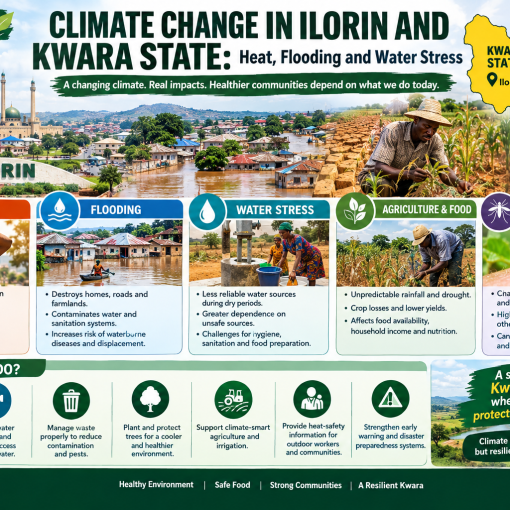
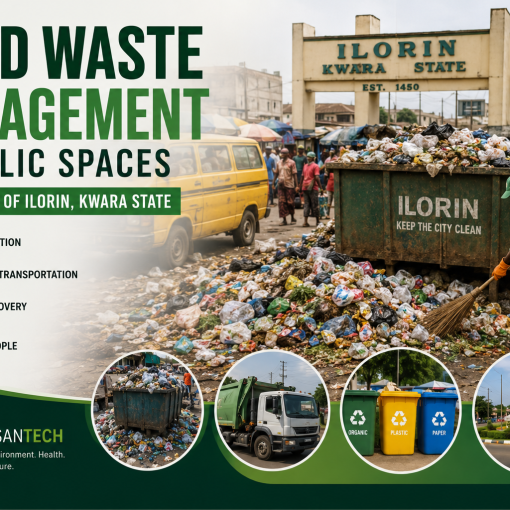
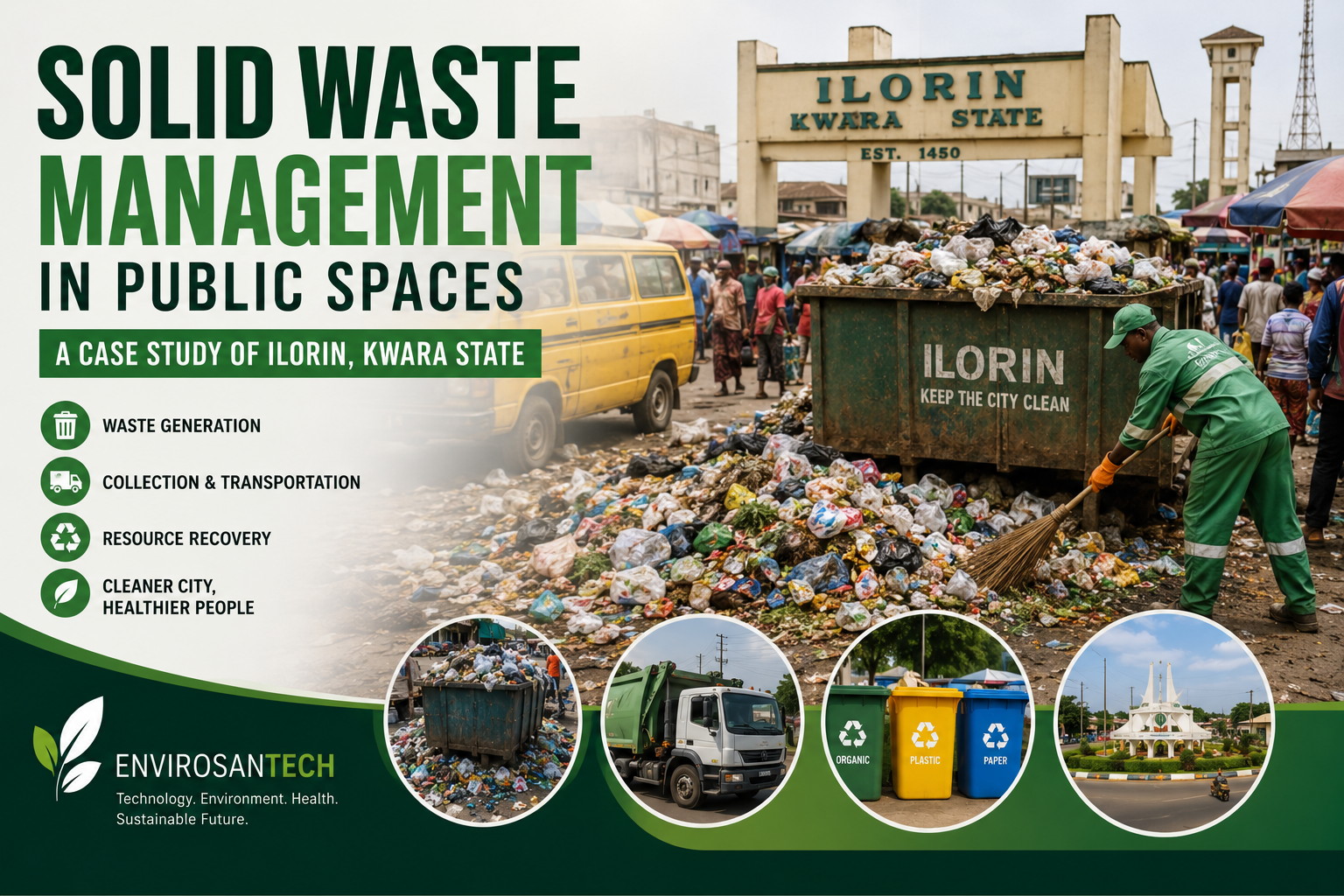
Poor solid-waste disposal can block drainage channels. Poor drainage can cause wastewater to stagnate. Stagnant water can support mosquito breeding. People may then be exposed to environmental conditions that increase health risks.
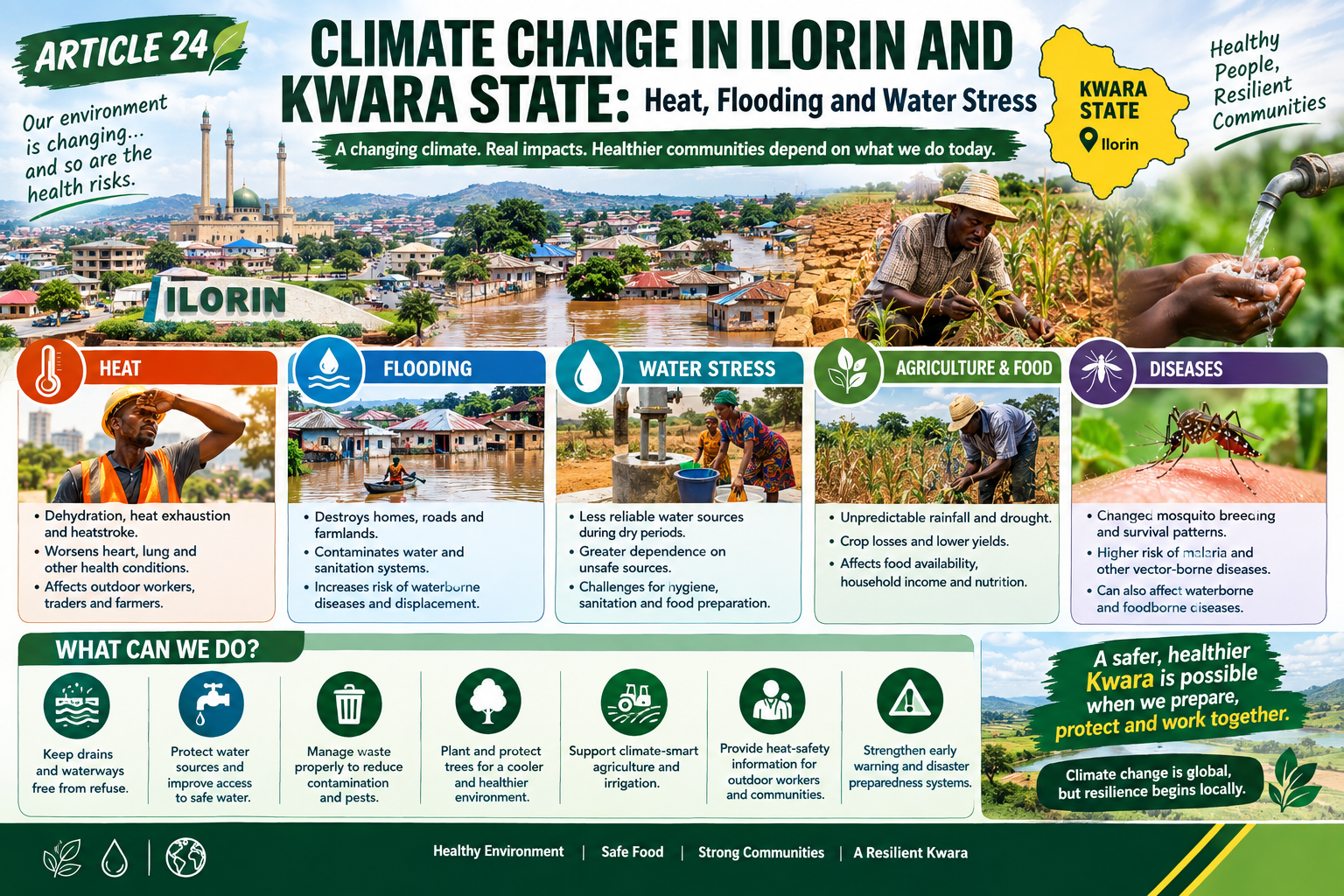
A recent study of environmental-health conditions in Ilorin reported that poor drainage, waste disposal, sanitation and water-quality conditions were associated with malaria risk in the metropolis (Fasasi et al., 2026).
The lesson is that environmental problems often interact rather than occur separately.
Wastewater and Antimicrobial Resistance
There is another reason wastewater management is becoming increasingly important.
Wastewater can contain microorganisms and substances associated with antimicrobial resistance. WHO explains that wastewater and sludge can contain antimicrobial-resistant organisms, resistance genes and antimicrobial compounds, making proper wastewater management relevant to efforts to reduce the spread of antimicrobial resistance (WHO, 2020).
The Ilorin abattoir study is particularly interesting in this regard because the researchers did not only identify bacteria. They also investigated their antibiotic susceptibility patterns (Akinloye et al., 2021).
This demonstrates why wastewater is not merely a sanitation issue. It can also be connected to microbiology and public health.
What Should Be Done?
Effective wastewater management in public places requires a system rather than a single intervention.
First, wastewater should be collected through appropriate drainage or conveyance systems rather than allowed to flow freely through public areas.
Second, facilities generating large quantities of contaminated wastewater should have appropriate treatment systems.
Third, drainage channels should be regularly inspected and maintained. Solid waste should not be allowed to block them.
Fourth, wastewater discharges should be monitored to ensure that they meet applicable environmental requirements.
Finally, workers and members of the public need appropriate education. People should understand that wastewater is not harmless simply because it looks like ordinary dirty water.
WHO’s Sanitation Safety Planning approach recommends identifying and prioritizing health risks throughout the sanitation chain and using those risks to guide monitoring and investment (WHO, 2022).
My Perspective as an Environmental Health Student
My Environmental Health Science education has changed how I see wastewater in Nigerian communities.
Before studying the subject, it would have been easy to look at wastewater in a drain simply as an unpleasant environmental condition. After learning about sewage and wastewater management, I understand that the more important questions are: Where did the wastewater come from? What does it contain? Where is it going? Who can come into contact with it? Has it been treated? And what happens if it enters a river or groundwater source?
My SIWES experience at RUWASSA also reinforced the importance of looking at environmental problems from a preventive perspective.
The late Professor Henry Sawyer was among the lecturers who contributed to my academic foundation, and my training has continued to show me that environmental health requires connecting scientific knowledge with what is happening in real communities.
Conclusion
Wastewater management is an important part of environmental sanitation because wastewater can carry biological, chemical and physical hazards into places where people live and work.
The Ilorin abattoir case demonstrates why this issue deserves attention. Research has identified diverse bacteria in abattoir wastewater and examined their antibiotic susceptibility, showing that wastewater can have implications beyond unpleasant odours or dirty surroundings (Akinloye et al., 2021).
My EHS 512 course helped me understand that proper wastewater management follows a chain: collection, conveyance, treatment, monitoring and safe discharge or reuse.
For Ilorin and other Nigerian cities, improving wastewater management means designing appropriate systems, maintaining drainage, controlling illegal discharges, monitoring effluent and protecting the public from unnecessary exposure.
Wastewater may leave a building or workplace, but the environmental-health responsibility does not end there. Where that wastewater goes, what it contains and what happens to it afterward are all part of the sanitation story.
References
Akinloye, O. M., et al. (2021). Plasmid profiles and antibiotic susceptibility patterns of bacteria isolated from abattoirs wastewater within Ilorin, Kwara, Nigeria. BMC Microbiology.
Fasasi, G. A. A., Akinsuroju, O. M., & Ibrahim, B. B. (2026). Impact of Environmental Health on the Prevalence of Malaria in Ilorin Metropolis, Kwara State, Nigeria. Al-Hikmah Journal of Health Sciences.
World Health Organization. (2020). Technical brief on water, sanitation, hygiene (WASH) and wastewater management to prevent infections and reduce the spread of antimicrobial resistance (AMR). WHO.
World Health Organization. (2022). Sanitation Safety Planning: Manual for step-by-step risk management for safely managed sanitation systems. WHO.
World Health Organization. (2024). Progress on the proportion of domestic and industrial wastewater flows safely treated. WHO/UN-Habitat.