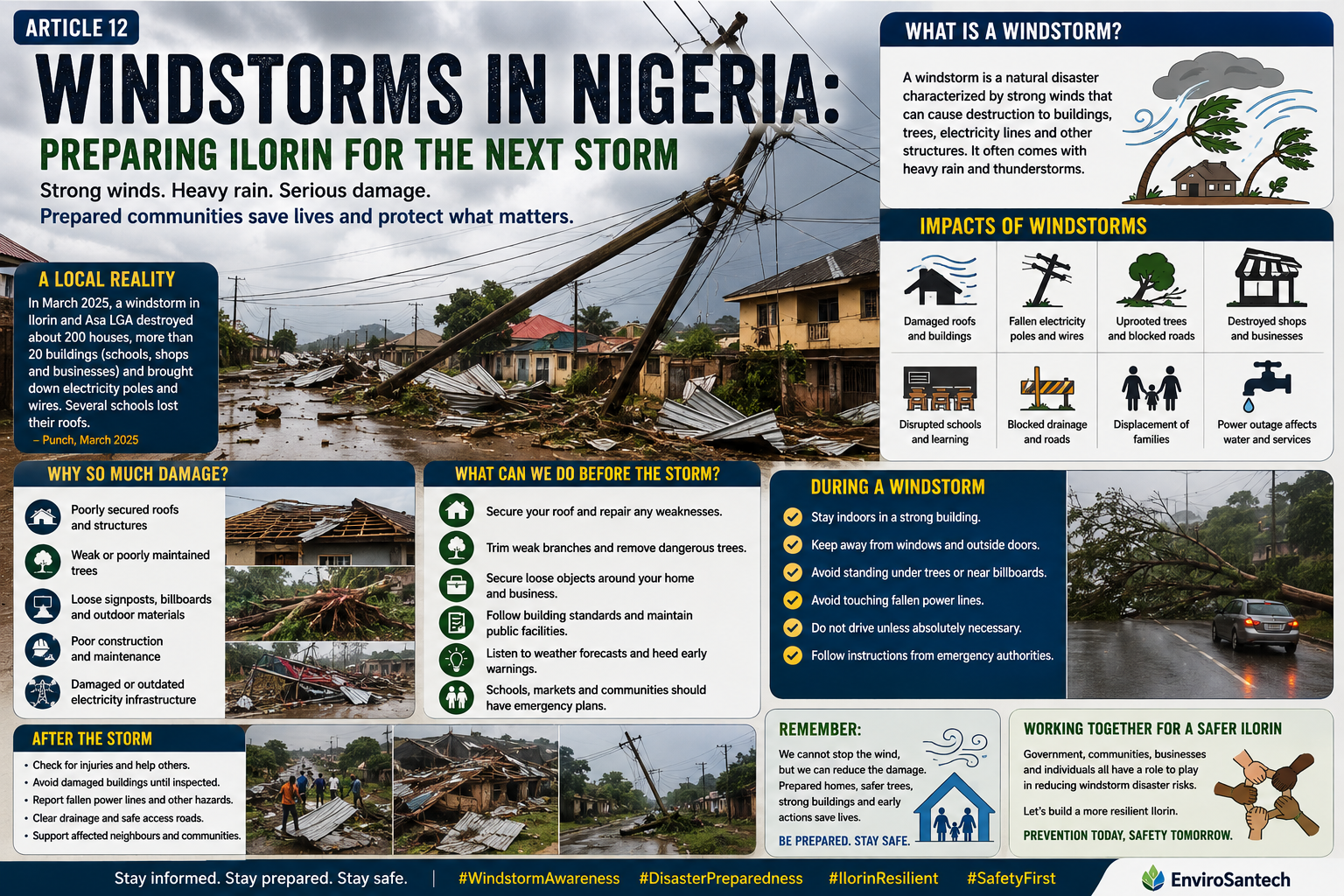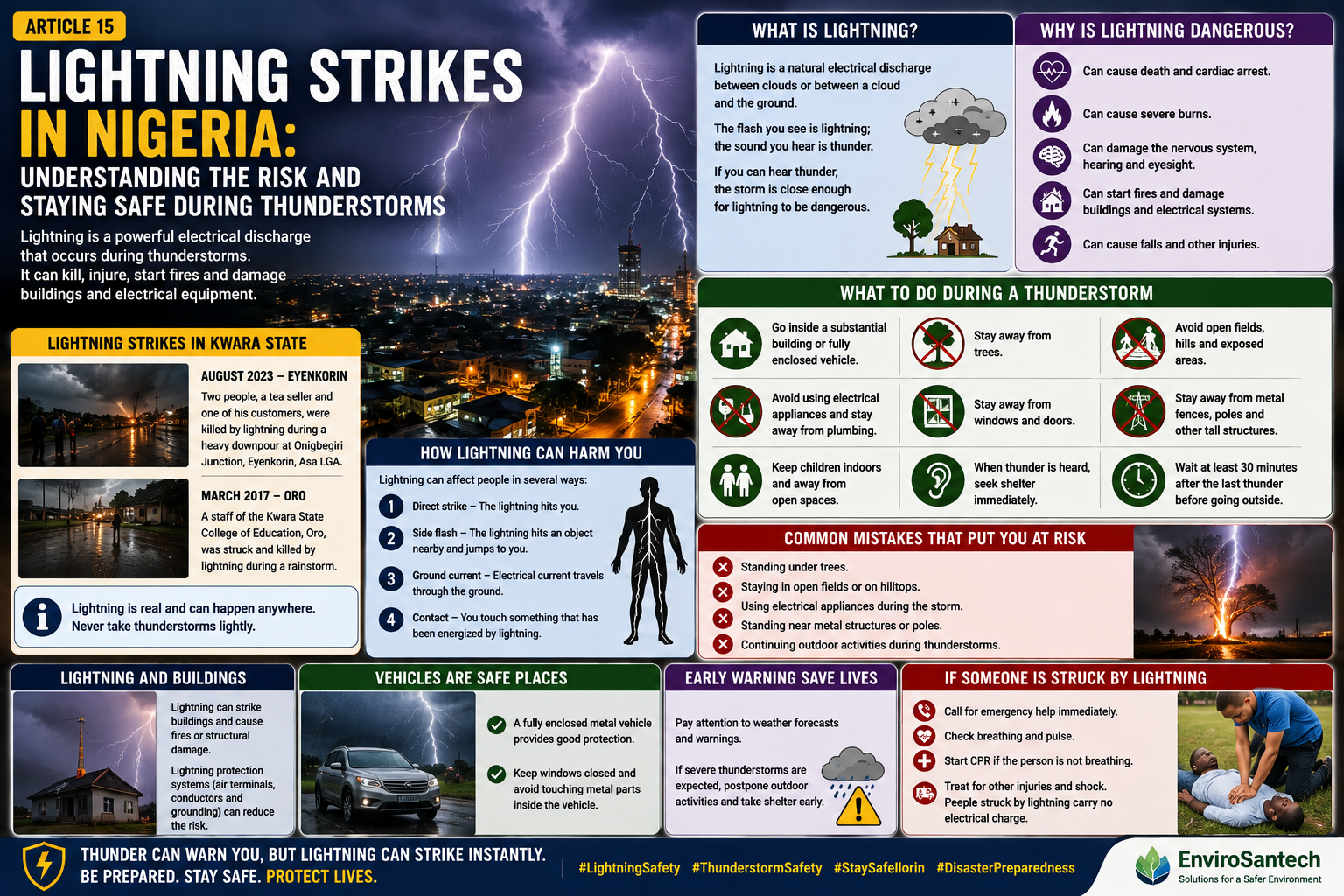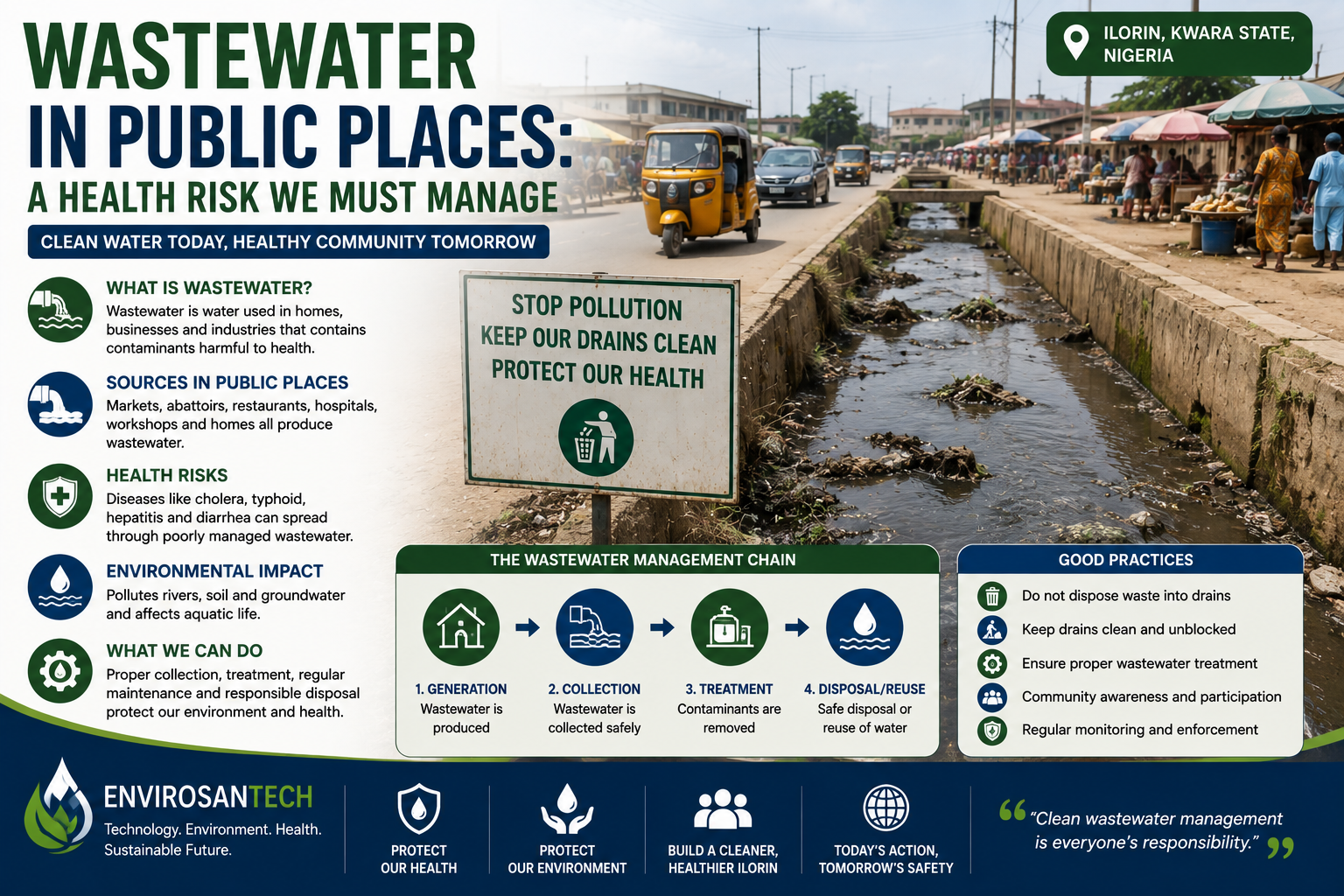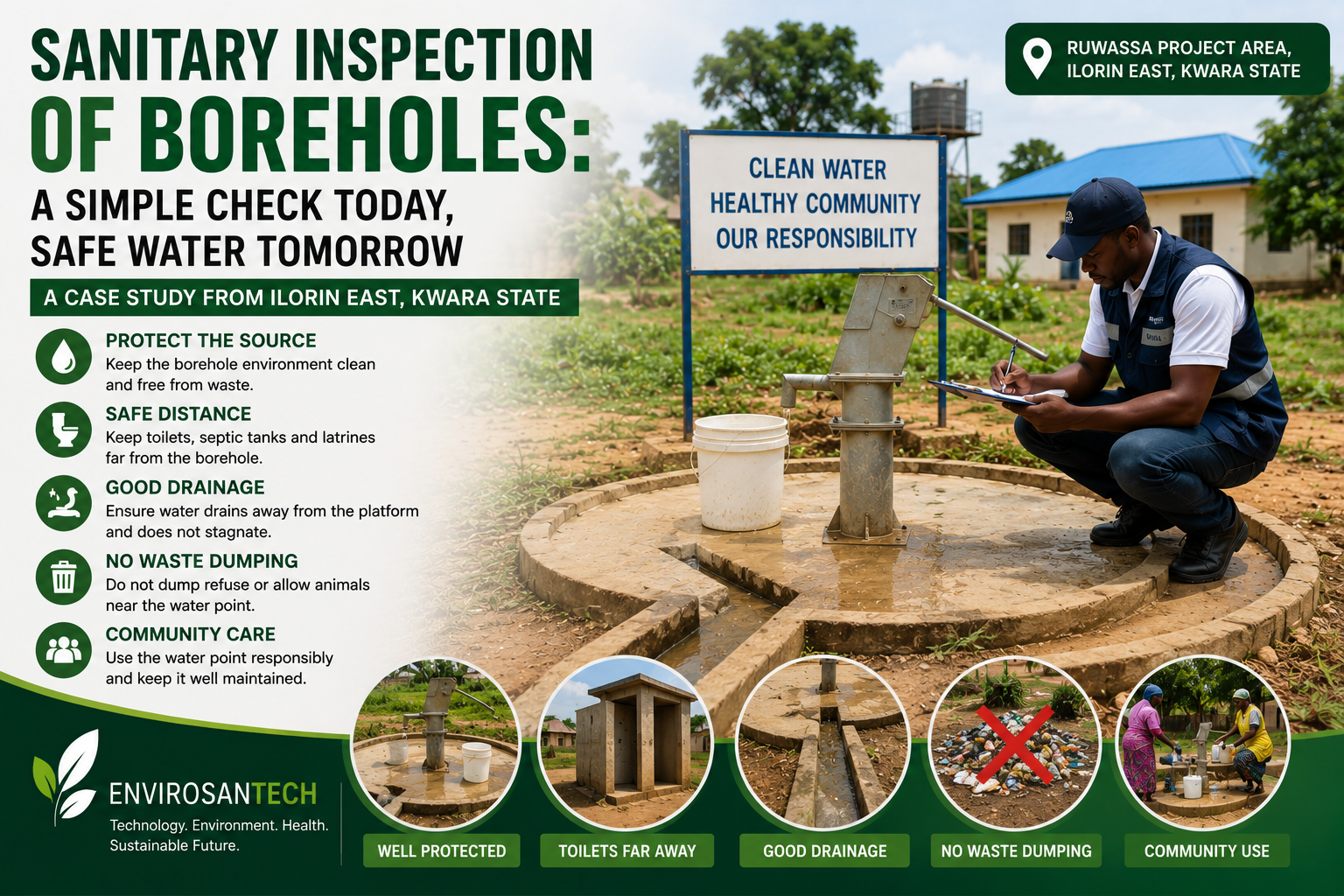
Air is something we rarely think about because it is always around us. We wake up, breathe, go to work, attend lectures, travel through traffic and return home without considering what exactly is entering our lungs with every breath.
Unlike dirty water or accumulated refuse, polluted air can be difficult to see. Sometimes it appears as smoke, dust or haze, but some of the most harmful pollutants are invisible.
Air pollution is the contamination of indoor or outdoor air by chemical, physical or biological agents that alter its natural characteristics. Major pollutants of public-health concern include particulate matter, carbon monoxide, nitrogen dioxide, sulphur dioxide and ozone (WHO, 2024).
For residents of Ilorin, air pollution is not simply a global environmental-health issue. It is something that can be experienced around busy roads, motor parks, workshops, markets, industrial areas and even inside homes.
As an Environmental Health Science student at Kwara State University, I have also learnt to look at air pollution differently. What may appear to be ordinary smoke from a generator or dust from a roadside can represent an exposure that deserves attention.
What We Are Taught About Air Pollution
One of the important lessons in Environmental Health is that hazard and exposure are not exactly the same thing.
A pollutant may exist in the environment, but the health risk depends partly on how much of it people are exposed to, how long the exposure lasts and the characteristics of the person exposed.
This is why environmental health professionals are interested in monitoring air quality.
Instead of simply saying that an area is “smoky,” air-quality assessment can involve measuring pollutants such as PM₂.₅, PM₁₀, carbon monoxide and other gases.
Particulate matter is particularly important because very small particles can penetrate deep into the respiratory system. WHO identifies particulate matter as one of the pollutants with strong evidence of adverse health effects (WHO, 2024).
That classroom knowledge becomes much easier to understand when you stand beside a busy road and watch vehicles continuously releasing exhaust.
The Sources Are All Around Ilorin
Air pollution in Ilorin does not come from one source.
Motor vehicles contribute exhaust emissions. Generators produce combustion pollutants. Workshops and industrial activities can release smoke, dust and other substances. Open burning of waste releases pollutants into the atmosphere. Construction activities and unpaved roads can generate dust.
There is also household air pollution.
People who cook with firewood, charcoal or other polluting fuels can inhale smoke inside poorly ventilated homes. WHO identifies household combustion of fuels such as wood, charcoal, coal, crop waste and kerosene as important sources of household air pollution (WHO, 2025).
This means that someone does not have to live beside a factory to experience air pollution.
It can happen at home.
It can happen on the road.
It can happen at work.
It can happen while waiting for a vehicle at a motor park.
What Research Has Found in Ilorin
There is scientific evidence showing that air pollution deserves attention in Ilorin.
A study published in Atmospheric Environment investigated particulate matter around six major intra-urban traffic intersections in Ilorin. The researchers reported concentrations of particulate matter above statutory limits at the locations studied and found evidence that both exhaust and non-exhaust traffic sources contributed to particulate pollution (Orosun et al., 2017).
This is particularly relevant to everyday life.
When vehicles stop, accelerate, brake and move through busy intersections, pollution is not coming only from the exhaust pipe. Road dust and particles generated from traffic-related activities can also contribute to exposure.
For someone who spends several hours every day beside a busy road, the exposure can become part of their routine.
Motor Parks Are Another Important Exposure Point
Motor parks bring together vehicles, drivers, passengers, traders and workers.
A study by Salami, Sawyerr and Dada assessed air quality in five major motor parks in Ilorin. The researchers monitored pollutants including carbon monoxide, particulate matter, formaldehyde, volatile organic compounds and hydrogen sulphide at different times of the day (Salami et al., 2020).
This type of study is important because it demonstrates why environmental health assessment needs actual measurements.
A motor park may look like an ordinary busy place, but the combination of vehicle exhaust, idling engines, dust and human activity can create a different exposure environment.
People who work there every day may have considerably more exposure than someone who visits for ten minutes.
A Case Study Around Asa-Dam
Another interesting local example comes from the Asa-Dam industrial area.
Researchers from the Centre for Ecological and Environmental Research, Management and Studies at Kwara State University assessed air quality in the Asa-Dam industrial area of Ilorin. Their assessment included particulate matter (PM₂.₅ and PM₁₀) and carbon monoxide, with measurements taken at selected locations around the study area (Dada, Salami & Sawyerr, 2020).
This is particularly relevant to my own academic background because the research involved environmental health researchers at KWASU.
It also shows how what we learn in class connects with research conducted in our immediate environment.
Air pollution is not something that exists only in Lagos, Port Harcourt or other heavily industrialised cities.
Ilorin has its own sources and exposure patterns.
Harmattan and Dust: Another Ilorin Problem
There is also a seasonal dimension to air quality.
Anyone who has experienced Harmattan in Ilorin knows that the atmosphere can become dusty and visibility can change significantly.
A 2020 study examined 20 years of visibility data for Ilorin, from 1998 to 2018, to estimate concentrations of total suspended particles and PM₁₀. The researchers identified November to March as the period with the greatest number of days associated with poorer air quality and reported that particulate concentrations could contribute to respiratory symptoms and aggravation of lung diseases (Balarabe & Saadu, 2020).
This is an important reminder that not all air pollution is produced locally.
Dust can also be transported through the atmosphere.
Therefore, environmental management has to consider both local sources and wider environmental conditions.
What We See During Everyday Activities
There are situations in Ilorin where air pollution becomes particularly noticeable.
Consider a roadside mechanic workshop.
There may be vehicle exhaust, dust from the road, fumes from engines, welding activities and other emissions occurring within a relatively small space.
Now consider someone who works there every day.
The issue is no longer simply whether the air smells unpleasant. The concern becomes repeated exposure.
The same principle applies to traders beside busy roads, traffic officers, motor-park workers, waste workers and people who spend long periods around combustion sources.
During environmental health training, we learn that occupational and environmental exposures need to be considered in relation to the duration and intensity of contact.
The Health Effects
Air pollution can affect different parts of the body.
WHO links air pollution exposure with respiratory diseases as well as cardiovascular conditions such as stroke and ischaemic heart disease. It is also associated with chronic obstructive pulmonary disease and lung cancer (WHO, 2024).
Short-term exposure may also cause symptoms such as irritation of the eyes, nose and throat, coughing and breathing difficulties, depending on the pollutant and concentration.
The danger is that some people may simply accept these symptoms as normal.
A trader may cough every day because of roadside dust.
A mechanic may experience persistent irritation from fumes.
A household member may repeatedly inhale cooking smoke.
Normalising the exposure does not make it safe.
Air Pollution and Fire Disaster
Air pollution also connects with the disaster series in an important way, but the two should not be confused.
Air pollution is not the same thing as a fire disaster.
However, some activities that pollute the air can also create fire risks.
Open burning of waste produces smoke and harmful pollutants. At the same time, uncontrolled burning can spread to surrounding materials and become a larger fire.
Poorly managed fuel, combustible waste and unsafe combustion practices can therefore create both air-quality and fire hazards.
This is why environmental health management should consider the wider consequences of an activity rather than examining only one problem.
What Can Be Done?
The most effective solution is reducing pollution at its source.
Vehicles should be properly maintained because poorly maintained engines can produce more emissions.
Industries and workshops should adopt appropriate pollution-control measures.
Open burning of waste should be discouraged.
Waste should be collected and managed through appropriate systems rather than burned indiscriminately.
Households should be encouraged and supported to move toward cleaner cooking fuels and technologies where possible.
WHO identifies cleaner household energy options—including electricity, solar, biogas and LPG—as important measures for reducing household air pollution (WHO, 2025).
Ventilation is also important, although simply opening windows cannot replace eliminating a major pollution source.
Monitoring Is Important
One thing environmental health has taught me is that you cannot effectively manage what you do not properly understand.
Air-quality monitoring provides information about what pollutants are present and where concentrations may be elevated.
This can help authorities identify high-risk locations, develop interventions and determine whether pollution-control measures are working.
Recent research on PM₂.₅ in Ilorin has also demonstrated the importance of continued monitoring. A 2025 Scientific Reports study investigated potentially toxic metals associated with fine particulate matter over Ilorin and identified health concerns associated with inhalation exposure, particularly during the dry season (Nwabachili et al., 2025).
That makes continued air-quality assessment important for the city.
The Environmental Health Approach
The environmental health approach is not simply to tell people, “Don’t breathe polluted air.”
People need to work, cook, travel and live.
The real question is how we can reduce unnecessary exposure while improving the environmental conditions responsible for the pollution.
This involves monitoring, regulation, education, occupational protection, cleaner technologies, better transportation systems, waste management and proper planning.
My experiences as an Environmental Health Science student have made me appreciate this preventive approach. What we are taught in class becomes much more practical when you observe traffic, generators, workshops, dust and waste-burning activities around Ilorin.
The environment is constantly communicating its problems. We simply need to learn how to read them.
Conclusion
Air pollution is often an invisible environmental health problem, but its effects can be very real.
Ilorin already has evidence of particulate pollution around traffic intersections, motor parks, industrial areas and during dusty seasons.
The solution is not to stop every activity that produces emissions. It is to identify the major sources, measure exposure, control emissions and protect the people who are most exposed.
For Ilorin, cleaner air will require cooperation between government agencies, industries, transport operators, households, businesses, environmental health professionals and residents.
We cannot choose to stop breathing.
But we can choose to make the air we breathe safer.
Clean air should not be something we notice only when it disappears. It should be part of the environment we protect every day.
References
- World Health Organization. (2024). Air pollution and health. WHO.
- World Health Organization. (2025). Household air pollution. WHO.
- Orosun, M. M., et al. (2017). Exposure to coarse and fine particulate matter at and around major intra-urban traffic intersections of Ilorin metropolis, Nigeria. Atmospheric Environment, 166, 383–392.
- Dada, A. A., Salami, J. T., & Sawyerr, H. O. (2020). Air quality index of Asa-Dam industrial area, Ilorin, Kwara State. International Journal of Research and Scientific Innovation.
- Salami, J. T., Sawyerr, H. O., & Dada, A. A. (2020). Assessment of Air Quality in Major Motor Parks in Ilorin Metropolis, Kwara State, Nigeria.
- Balarabe, M., & Saadu, B. (2020). Impact of Dust Particles on Air Quality and Associated Human Health in Ilorin Nigeria. FUDMA Journal of Sciences, 4(3), 481–488.
- Nwabachili, S., Falaiye, O., Orosun, M., et al. (2025). Potentially toxic metals, source apportionment, meteorological impacts and health risks assessment of fine particulate matter (PM₂.₅) over Ilorin, Nigeria. Scientific Reports, 15, 45649.