A course taken by Dr. Yusuf Adiama
When we talk about climate change, the conversation often turns to melting ice, rising sea levels and distant environmental problems. But climate change is not something happening only in other parts of the world. It is also a Nigerian environmental-health issue.
In my Environmental Health Science training, one lesson that continually stands out is that human health cannot be separated from the environment. The water we drink, the air we breathe, the food we eat and the places where we live and work all influence our health. Climate change can affect each of these determinants.
As Professor Henry Sawyer taught us during our environmental-health training, understanding an environmental problem requires looking beyond its appearance and considering the factors that create exposure and risk. Climate change provides a perfect example of this principle.
What is climate change?
Climate change refers to long-term changes in temperature and weather patterns. Natural processes can influence the climate, but the rapid warming observed today is primarily associated with human activities that increase greenhouse-gas concentrations, particularly the burning of fossil fuels, deforestation and some industrial and agricultural activities (IPCC, 2023).
The World Health Organization (WHO) considers climate change one of the major threats to human health because it affects essential conditions for healthy living, including clean air, safe water, nutritious food and adequate shelter (WHO, 2024).
For Nigeria, the issue is particularly important because the country already experiences environmental challenges such as flooding, drought, heat, poor sanitation and pressure on water and food systems. Nigeria’s climate-risk profile identifies flooding, drought, increasing aridity, extreme temperatures and other climate-related hazards as important risks to the country (World Bank, 2021).
Nigeria is already experiencing climate-related risks
Climate change does not mean that every environmental problem in Nigeria is caused by climate change. Flooding, for example, can result from intense rainfall, blocked drainage, poor urban planning, construction on floodplains and inadequate infrastructure.
However, climate change can increase the frequency or intensity of some climate hazards and make existing vulnerabilities worse (World Bank, 2021).
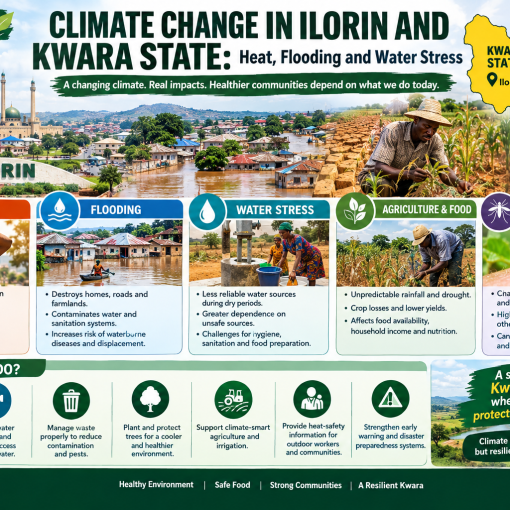
Nigeria has experienced major examples of climate-related emergencies. The 2012 floods affected many parts of the country, causing deaths, displacement and extensive damage to homes, infrastructure and livelihoods. More recently, the 2022 floods affected millions of people across Nigeria. UNICEF reported that approximately 4.4 million people, including 2.6 million children, were affected by the 2022 flooding (UNICEF, 2022).
These events demonstrate how environmental hazards can quickly become public-health emergencies.
The consequences can extend beyond the immediate physical damage. Flooding can interrupt healthcare services, contaminate water sources, displace families and interfere with education and livelihoods.
These examples show why climate change should concern Environmental Health professionals.
Heat: the danger we sometimes overlook
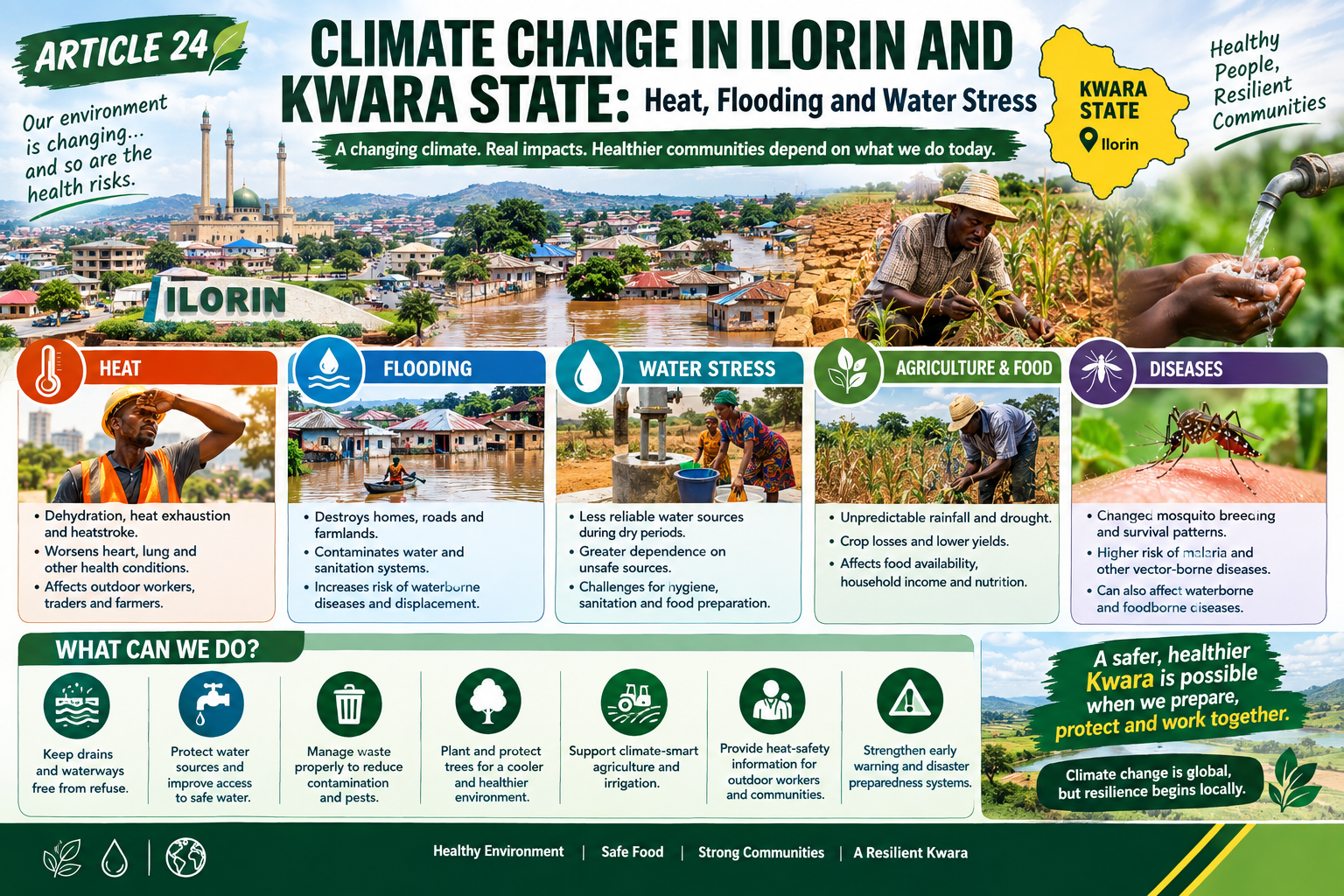
One of the most direct ways climate change affects human health is through increasing heat exposure.
In Nigeria, high temperatures are already familiar. But there is an important difference between simply saying “Nigeria is hot” and understanding heat as an environmental and occupational health hazard.
People working outdoors are particularly exposed. Consider a roadside trader sitting under intense sunlight for several hours, a farmer working on a field, a construction worker handling heavy materials, or an Environmental Health professional conducting field inspections during the hottest part of the day.
Prolonged heat exposure can cause dehydration, heat exhaustion and heatstroke. Extreme heat can also worsen existing cardiovascular, respiratory and other health conditions and can reduce workers’ ability to perform physically demanding tasks safely (WHO, 2024).
This is an issue I have become more conscious of through Environmental Health field activities. When conducting inspections or spending extended periods outdoors, environmental conditions are not merely background conditions. They are part of the exposure assessment.
This is why measures such as access to drinking water, shaded rest areas, appropriate work schedules and public education can become important occupational-health interventions.
Climate change and water
Water is another major connection between climate and health.
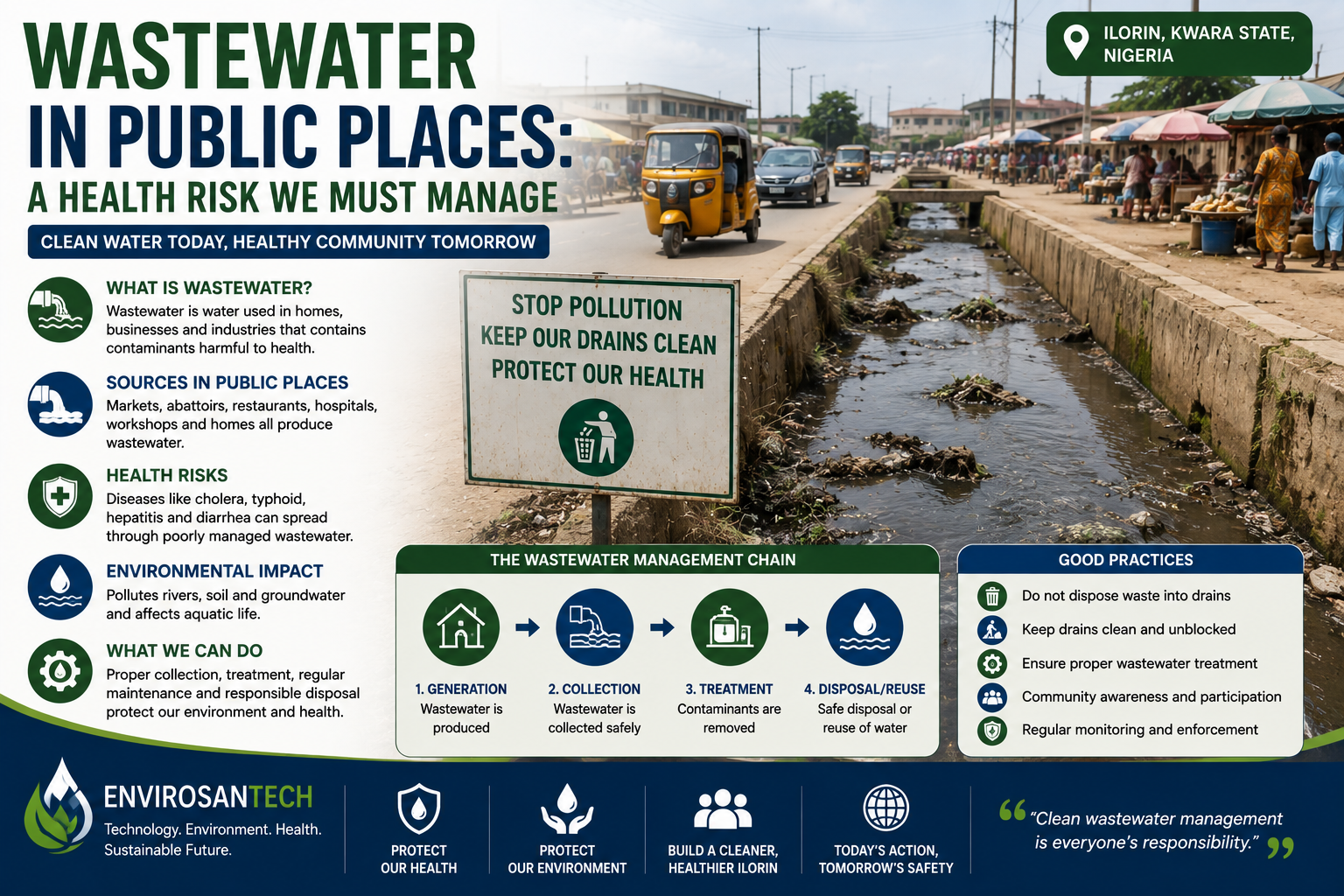
Imagine a community experiencing a prolonged dry period. Water sources become less reliable, and households may travel farther or depend on alternative sources. When water is scarce, maintaining good personal hygiene, cleaning food utensils and keeping sanitary facilities clean can become more difficult.
The opposite problem can occur during excessive rainfall. Floodwater can enter homes and come into contact with sewage, refuse and other contaminants.
This relationship became clearer to me during Environmental Health training and field exposure, including sanitary inspection activities. A water source cannot be assessed simply by looking at whether the water appears clear. Its surroundings, sanitary condition, possible contamination pathways and human activities around it must also be considered.
Climate change can place additional pressure on these systems. UNICEF has documented how flooding and drought in Nigerian communities can affect access to safe water and contribute to contamination of groundwater where sewage and poorly constructed latrines are affected by floods (UNICEF, 2020).
UNICEF has also reported that inadequate WASH services combined with climate hazards pose significant risks to children in Nigeria (UNICEF, 2023).
Agriculture, food and nutrition
Nigeria’s food system is also vulnerable to climate variability.
Farmers depend on appropriate rainfall, temperature and soil moisture. When rainfall becomes unpredictable, drought occurs or excessive rainfall damages crops, agricultural productivity can suffer.
The consequences do not stop at the farm.
Reduced agricultural production can affect food availability, household income and food prices. Flooding can destroy farmland, while prolonged dry conditions can reduce crop yields. The World Bank identifies agriculture as one of the sectors particularly vulnerable to climate-related flooding and drought in Nigeria (World Bank, 2021).
UNICEF’s climate analysis for Nigeria similarly identifies drought, flooding and higher temperatures as important threats to children’s nutrition and food security (UNICEF, 2023).
This is why climate change must also be discussed as a nutrition and public-health issue.
Climate change and infectious diseases
Another important concern is disease transmission.
Temperature and rainfall influence the environment in which mosquitoes and other disease vectors survive and reproduce. Changes in these conditions can alter the timing, geographical distribution and intensity of some climate-sensitive diseases.
The WHO explains that climate change can influence the conditions in which infectious diseases, including vector-borne and waterborne diseases, occur (WHO, 2024).
However, we should be careful not to oversimplify the relationship.
Climate change does not automatically mean that someone will develop malaria. Disease transmission also depends on sanitation, housing, vector-control measures, healthcare access, human behaviour and socioeconomic conditions.
This is precisely why Environmental Health approaches problems through multiple interacting risk factors.
Flooding, displacement and mental health
Climate-related hazards can also affect health indirectly.
When floods destroy houses, businesses, roads or public facilities, people may lose their livelihoods and access to essential services. Displacement can result in overcrowding and difficulties obtaining safe water, sanitation, food and healthcare.
Nigeria has witnessed these consequences during major flood events. UNICEF documented communities in Bayelsa State where flooding damaged homes, schools and health facilities, disrupted children’s education and forced families to leave their homes (UNICEF, 2022).
There can also be psychological consequences.
Climate-related disasters can cause stress, anxiety and other mental-health difficulties, particularly when people lose homes, livelihoods or social support (WHO, 2023).
Therefore, responding to a flood should not end when the water recedes. Environmental Health interventions may need to continue through water-quality monitoring, sanitation, waste management, disease surveillance and community health education.
Who is most vulnerable?
Climate change does not affect everybody equally.
Children, older adults, outdoor workers, low-income households and people living in areas with inadequate infrastructure can face greater exposure or have fewer resources to adapt.
This is particularly important in Nigeria. UNICEF’s Climate Landscape Analysis for Children in Nigeria found that children are disproportionately affected by climate change because of their physiology, dependence on adults and vulnerability to disease, malnutrition and disruptions to essential services (UNICEF, 2023).
UNICEF previously ranked Nigeria among countries where children face extremely high climate risk, with exposure to hazards including heatwaves, flooding, air pollution and water scarcity (UNICEF, 2021).
For example, two people may experience the same hot afternoon, but someone working outdoors without shade or reliable access to drinking water faces a very different level of risk from someone working inside a well-ventilated building.
That is an important Environmental Health principle: hazard alone does not determine risk; exposure and vulnerability matter too.
What can Environmental Health professionals do?
Climate change requires action from many sectors, but Environmental Health professionals have an important role.
Their responsibilities can contribute to climate resilience through:
- sanitary inspection;
- water and food safety;
- waste management;
- vector control;
- environmental monitoring;
- health education;
- occupational-health protection;
- disease surveillance; and
- emergency preparedness.
Climate-informed surveillance is particularly important because weather conditions can influence disease patterns. WHO recommends integrating climate information into health surveillance and early-warning systems to improve preparedness for climate-sensitive health risks (WHO, 2024).
At community level, some measures are relatively straightforward: protecting water sources, maintaining drainage, planting and preserving trees, improving waste management, providing shade for outdoor workers and ensuring communities receive timely warnings about extreme weather.
A practical Nigerian example can be found in communities in Delta State, where climate-resilience interventions have included solar-powered boreholes, elevated water points and sanitary surveillance of water sources to reduce the effects of flooding on water access and quality (UNICEF, 2020).
This demonstrates an important principle: climate adaptation does not always require complicated technology. Sometimes it means modifying existing environmental-health systems so they continue protecting people when conditions change.
Climate change is not just an environmental problem
My Environmental Health training has taught me that environmental problems rarely remain confined to the environment. A change in one part of the system can eventually affect human health.
Climate change demonstrates this clearly.
Heat affects workers. Flooding affects sanitation. Drought affects water. Changing environmental conditions can influence disease vectors. Extreme weather can affect food production and livelihoods. Disasters can affect mental health.
Nigeria therefore needs to approach climate change not only as an environmental challenge but also as a public-health and environmental-health priority.
For me, this is one of the most important lessons from Environmental Health Science: prevention is better than waiting until environmental conditions become a health emergency.
Climate change may be global, but the response must also be local. From the farmer in Kwara to the market trader in Ilorin, from the sanitation worker in the field to the family depending on a local water source, climate conditions can shape everyday health.
The climate is changing. The question for Environmental Health is how prepared we are to protect people from its consequences.
— Dr. Yusuf Adiama
References
Intergovernmental Panel on Climate Change (IPCC). (2023). Climate Change 2023: Synthesis Report. Geneva: IPCC.
UNICEF. (2020). Mitigating the effects of climate change on water access and quality in Nigeria. UNICEF Nigeria.
UNICEF. (2021). Children in Nigeria at extremely high risk of the impacts of the climate crisis. UNICEF Nigeria.
UNICEF. (2022). Nigeria Emergency Flood Response: September–December Flash Update. UNICEF Nigeria.
UNICEF. (2022). Children at risk as floods devastate Sagbama. UNICEF Nigeria.
UNICEF. (2023). Climate Landscape Analysis for Children in Nigeria: Climate Action Plan 2023–2027. UNICEF Nigeria.
UNICEF. (2023). A triple threat of water-related crises is endangering the lives of 78 million children in Nigeria. UNICEF Nigeria.
World Bank. (2021). Climate Risk Country Profile: Nigeria. World Bank Group.
World Health Organization (WHO). (2023). Climate change and health. WHO.
World Health Organization (WHO). (2024). Climate change and health. WHO.