Food contamination is one of those environmental health problems that can happen without warning. A meal may look fresh, smell normal and taste perfectly fine, yet still contain microorganisms, chemicals or other hazards capable of causing illness.
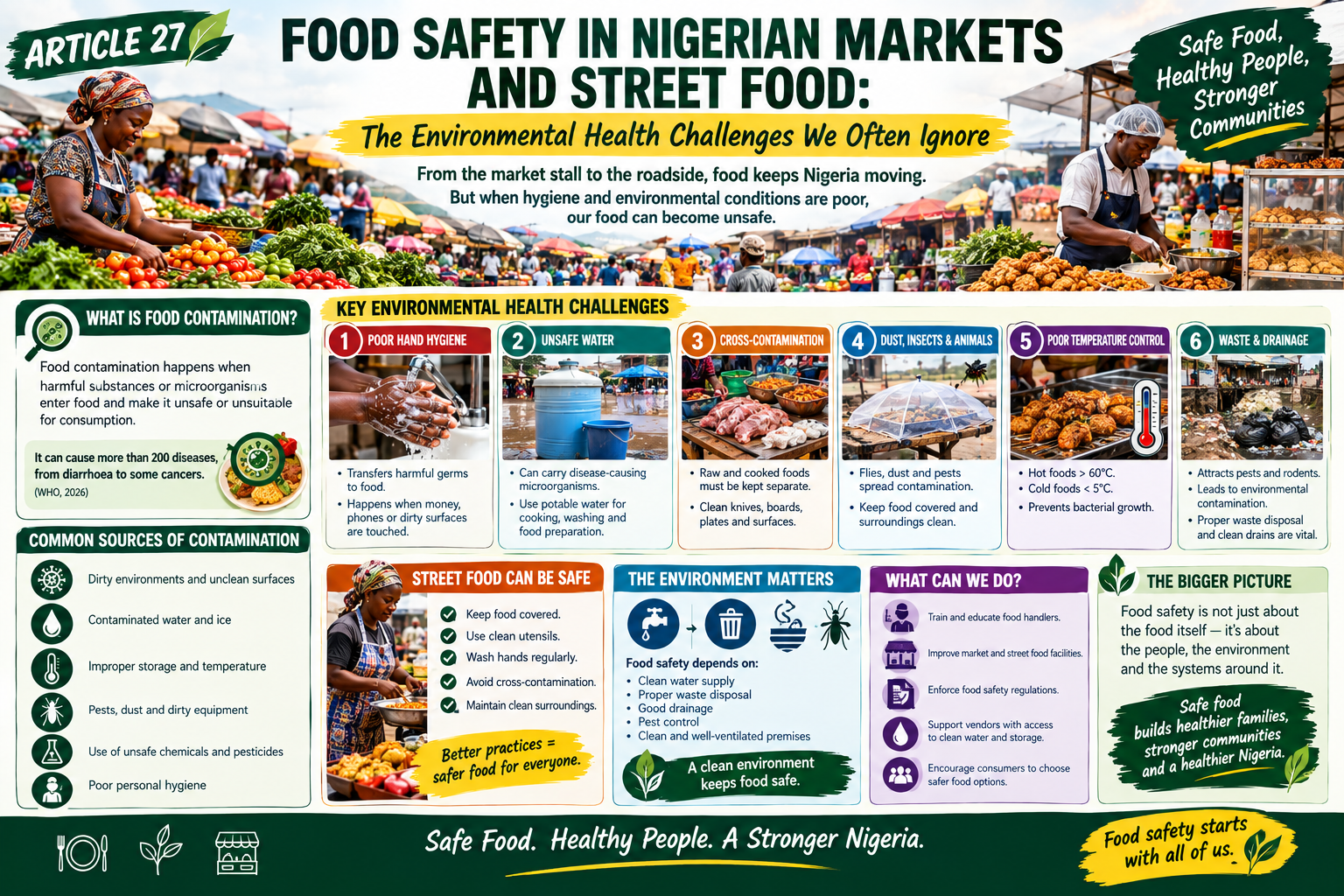
Food safety is therefore much more than keeping a kitchen clean. It involves protecting food from contamination throughout the journey from production to processing, transportation, marketing, preparation and consumption. The World Health Organization (WHO) states that contaminated food can cause more than 200 diseases, ranging from diarrhoeal illnesses to some cancers (WHO, 2026).
In Nigeria, where millions of people purchase food from open markets, street vendors, restaurants and informal food businesses every day, understanding how contamination occurs is an important part of protecting public health.
What Exactly Is Food Contamination?
Food contamination occurs when something harmful enters food and makes it unsafe or unsuitable for consumption.
According to NAFDAC, contaminants may include biological agents, chemical agents, foreign matter or other substances that can compromise food safety (NAFDAC, 2024).
Contamination can happen at almost any stage of the food chain. A crop can become contaminated before harvest, meat can become contaminated during slaughter, food can be exposed during transportation, and cooked food can become contaminated during preparation or serving.
This is why food safety cannot be the responsibility of only the person cooking the final meal.
1. Biological Contamination
Biological contamination involves harmful organisms such as bacteria, viruses and parasites.
Bacteria including Salmonella, certain strains of Escherichia coli and Campylobacter can cause foodborne illness. Viruses and parasites can also enter food through contaminated water, soil, hands, animals or food-contact surfaces (WHO, 2026).
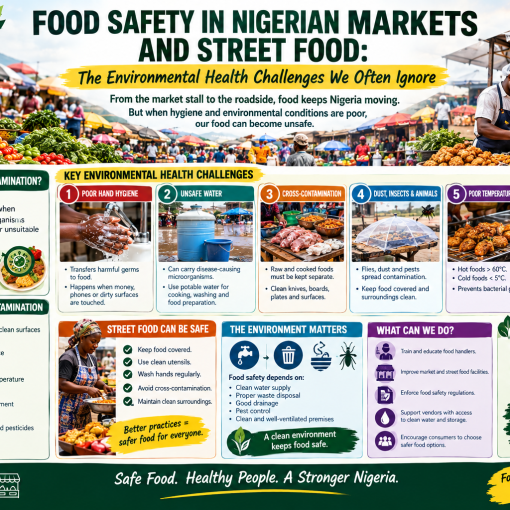
Poor hand hygiene is one important route. If a food handler uses the toilet and fails to wash their hands properly before preparing food, microorganisms can be transferred directly to the food.
Contaminated water is another concern. Vegetables washed with unsafe water can carry microorganisms into meals, particularly when they are eaten raw or receive insufficient further treatment.
2. Cross-Contamination: When One Food Contaminates Another
Cross-contamination occurs when harmful microorganisms move from one food, surface or object to another.
Consider a simple example: a vendor uses a knife to cut raw chicken and then uses the same knife to cut cooked meat without properly washing and sanitizing it. Microorganisms from the raw chicken may be transferred to the cooked food.
The same thing can happen through cutting boards, plates, hands, kitchen towels and other utensils.
WHO’s food-safety guidance recommends keeping raw and cooked foods separate as one of the basic principles for preventing foodborne disease (WHO, 2026).
This principle is especially important in busy Nigerian kitchens and food businesses where large quantities of different foods may be prepared simultaneously.
3. Chemical Contamination
Not every food hazard is a microorganism.
Food can also become contaminated by chemicals. These may include pesticide residues, cleaning chemicals, heavy metals, naturally occurring toxins and other hazardous substances.
Chemical contamination may occur during farming, processing, storage or preparation. For example, agricultural chemicals can remain on food when pesticides are improperly applied or when recommended safety practices are ignored.
Some chemical hazards may cause immediate poisoning, while repeated exposure to certain contaminants can contribute to longer-term health problems (WHO, 2026).
This is one reason environmental health professionals must consider the entire environment surrounding food production rather than looking only at the final product.
4. Poor Storage Can Make Food Dangerous
Food that was initially safe can become hazardous when stored improperly.
Temperature is particularly important. Some microorganisms multiply rapidly when food remains in conditions that support their growth. Cooked food left for long periods at unsuitable temperatures can therefore become unsafe.
Poor storage can also expose food to insects, rodents, dust, moisture and other contaminants.
NAFDAC’s Food Hygiene Regulations require food businesses to maintain appropriate conditions for food storage and to control temperatures where necessary (NAFDAC, 2025).
For Nigerian households and food vendors, proper refrigeration where required, appropriate covering of food and avoiding unnecessary prolonged storage are simple but important precautions.
5. Mould and Natural Toxins
Some food contamination problems are less obvious.
Mould can develop when foods such as grains, groundnuts and other agricultural products are poorly dried or stored under conditions of excessive moisture. Certain moulds can produce mycotoxins, which are chemical substances capable of causing serious health effects.
This demonstrates why food safety also begins at the farm and storage stages.
A consumer may carefully wash and cook a food product but still face a risk if the raw material was already contaminated with a toxin that cooking cannot reliably eliminate.
6. The Environment Around Food Matters
Food does not exist separately from its environment.
A food stall located beside an open drain, refuse accumulation or stagnant water may face greater opportunities for contamination. Flies and other pests can move between waste and exposed food.
Similarly, poor sanitation around markets can increase environmental contamination.
This is why environmental health inspections consider factors such as water supply, drainage, waste disposal, cleanliness, food storage and personal hygiene. NAFDAC’s food hygiene guidance covers food establishments ranging from markets and restaurants to homes and other food-handling environments (NAFDAC, 2024).
During my Environmental Health training, sanitary inspection taught me an important principle: the condition of the environment surrounding an activity can influence the health outcome of that activity. Food safety is a clear example.
7. Street Food Should Be Managed, Not Simply Condemned
Street food is an important part of Nigerian society. It provides affordable meals and creates employment for many people.
The problem is not that food is sold on the street. The real question is under what conditions is it prepared, stored and served?
A street-food vendor who uses safe water, maintains clean utensils, protects food from flies and dust, washes hands regularly and stores food appropriately can significantly reduce contamination risks.
Nigeria’s national food-safety efforts recognize the importance of training food vendors, food handlers, processors and other people involved in the food chain. WHO and Nigerian authorities have emphasized capacity-building across the farm-to-table system (WHO Nigeria, 2021).
8. Children Are Particularly Vulnerable
Food contamination does not affect everyone equally.
Young children, older adults and people with weakened immune systems can be particularly vulnerable to serious consequences from foodborne disease. WHO’s latest estimates indicate that children under five carry a substantial share of the global health burden associated with unsafe food (WHO, 2026).
Repeated diarrhoeal illness in children can also contribute to dehydration and malnutrition.
This makes food safety especially important in homes, schools, childcare settings and places where meals are prepared for large numbers of children.
What Can We Do?
Preventing food contamination requires action at several levels.
Food producers should use safe agricultural practices and protect water and soil from contamination.
Food vendors and handlers should maintain personal hygiene, clean equipment properly, separate raw and cooked foods and protect food from pests.
Households should use safe water, wash appropriate foods properly, cook food thoroughly and store leftovers safely.
Environmental Health professionals should inspect food premises, educate food handlers, identify environmental hazards and support enforcement of food-safety standards.
Government and regulatory agencies must strengthen food-control systems, surveillance and enforcement. WHO’s updated foodborne-disease surveillance guidance emphasizes the importance of detecting and responding to food-safety events quickly (WHO, 2026).
Food Safety Is Everyone’s Responsibility
Food contamination does not always announce itself. There may be no strange smell, unusual colour or visible sign before contaminated food is eaten.
That is why prevention is more reliable than waiting for illness.
From the farm to the market, from the food vendor to the household kitchen, every person involved in the food chain has a role to play.
For Nigeria, improving food safety means improving hygiene, sanitation, water quality, food handling, storage, inspection, education and surveillance at the same time.
The food we eat should nourish us, not expose us to preventable disease. Food safety begins long before the first bite.
References
- National Agency for Food and Drug Administration and Control (NAFDAC). (2024). NAFDAC Guidelines for Food Hygienic Practices (NGFHP).
- National Agency for Food and Drug Administration and Control (NAFDAC). (2025). NAFDAC Food Hygiene Regulations, 2025.
- World Health Organization (WHO). (2026). Food safety.
- World Health Organization (WHO). (2026). Foodborne diseases.
- World Health Organization (WHO). (2026). Assessing microbiological risks in food.
- World Health Organization Regional Office for Africa. (2021). Nigeria strengthens food safety, launches unified training manuals.
- World Health Organization. (2026). Updated WHO manuals released to help countries strengthen foodborne disease surveillance and response.